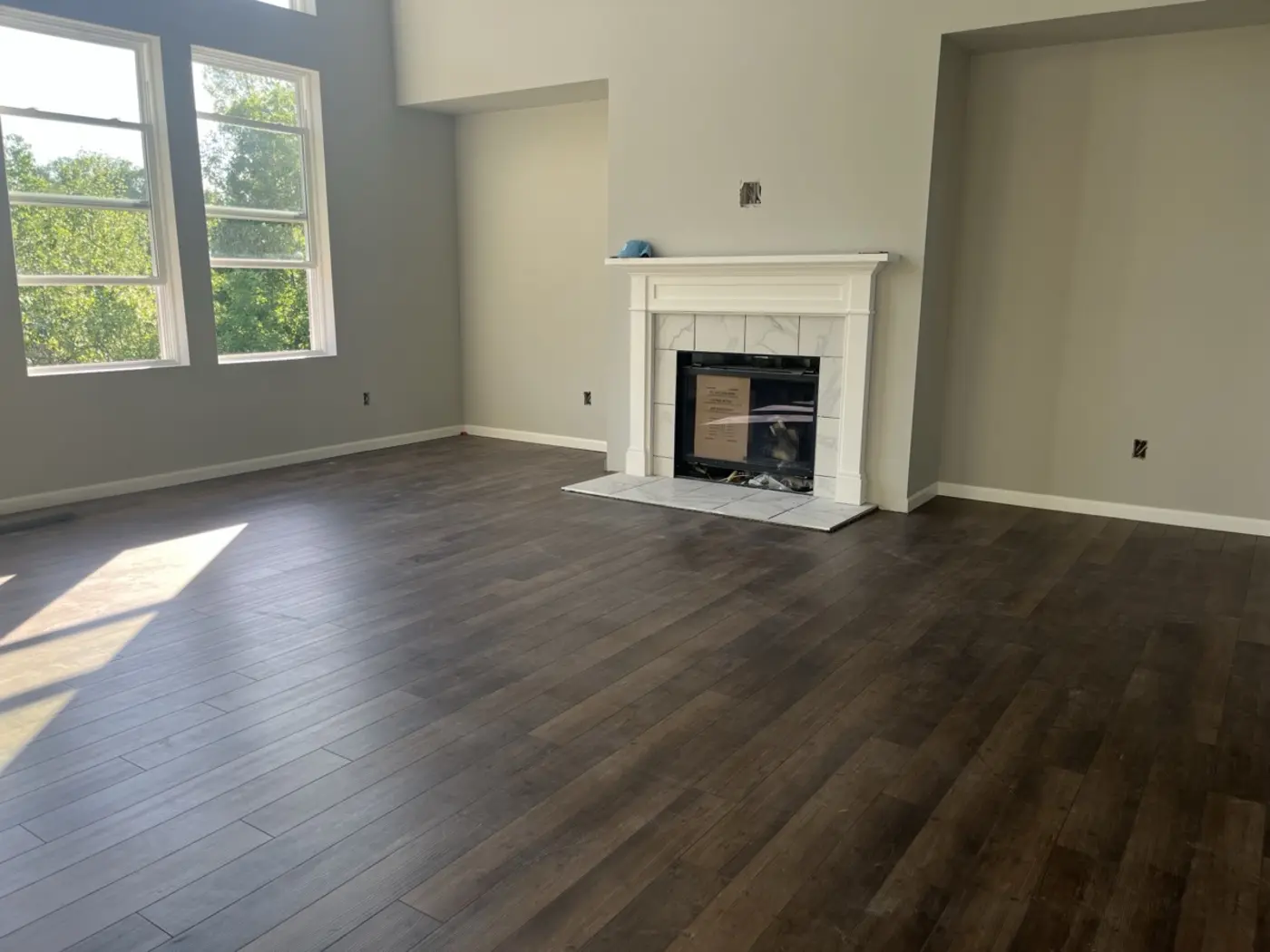
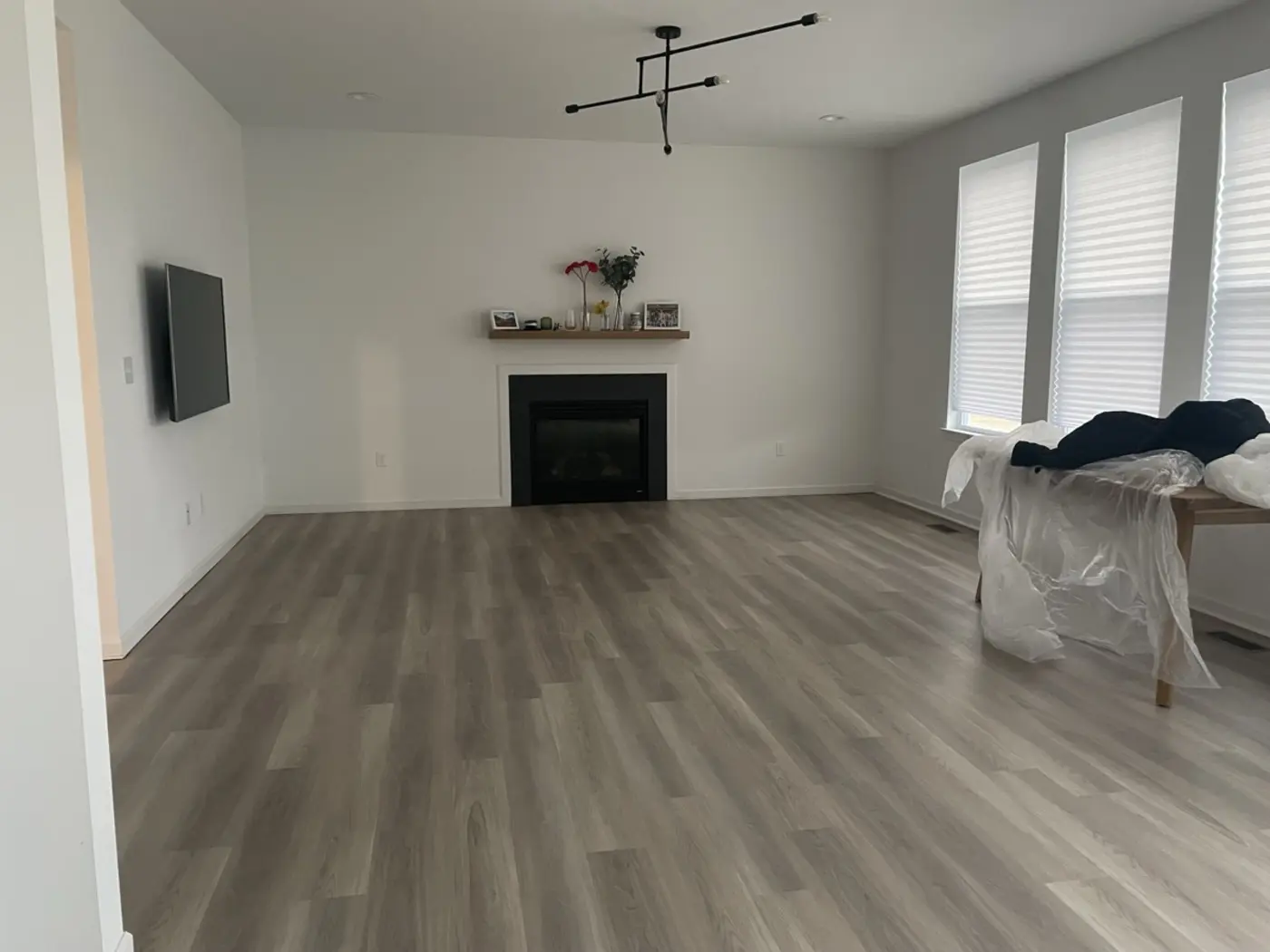
These two floors look alike from across a room. Up close and over ten years, they behave very differently. If you are standing in a Detroit living room trying to decide, here is what actually matters.
What each floor is made of
Engineered hardwood is real wood all the way through its top layer. Under that sits a stack of plywood or hardwood plies glued in alternating directions. That cross-grain construction is what keeps it stable when the air gets wet in July and bone dry in January.
Laminate is a high-density fiberboard core topped with a printed image of wood and a hard clear wear layer. It is not wood on the surface, but it is a tough, well-engineered product that has improved a lot in the last decade.
How they handle Michigan weather
Our winters are dry indoors and our summers are sticky. Solid hardwood reacts to that by gapping and cupping. Engineered hardwood moves much less because of its layered build, which is why it is our go-to wood floor for local homes. Laminate is stable too, but its fiberboard core does not like standing water. A wet boot tray that overflows every winter, or a leaky dishwasher, can swell the edges.
Salt is the other local factor. Everyone tracks road salt in from November to March. Both floors clean up fine with a damp mop, but you want to catch puddles quickly, especially on laminate seams.
Durability and daily wear
- Scratches. Laminate usually resists surface scratches better than a softer wood species.
- Dents. Dropped pans can dent real wood. Laminate is harder but can chip.
- Pets. Both are fine with normal pets. Laminate is slightly more slip-prone for dogs running at speed.
- Sound. Both can sound hollow without a good underlayment. We pair them with the right pad.
- Lifespan. Engineered hardwood commonly lasts decades. Laminate has a shorter typical life.
Resale and the feel of the house
Buyers in Birmingham, Royal Oak and Bloomfield Hills notice real wood. It reads as quality when they walk in, and it signals a house that was cared for. Laminate can look very good, but an experienced buyer or agent will often know the difference. If you plan to stay ten years or more, or sell soon in a market where wood floors are a selling point, engineered hardwood is the stronger choice.
If you are renovating a rental, a starter home, or a space like a kids' playroom, laminate delivers a clean wood look at a friendlier price.
Cost comparison
These are typical ranges. Your written quote after the free in-home estimate sets the real number.
Subfloors in older Detroit homes
Whichever you pick, the subfloor decides how it looks in year two. In 1920s to 1960s houses we often find plank subfloors with dips, squeaks, and old adhesive from earlier flooring. We level, fasten and clean it up as part of the job. Our floor repair and installation work covers both sides.
Where each floor works best
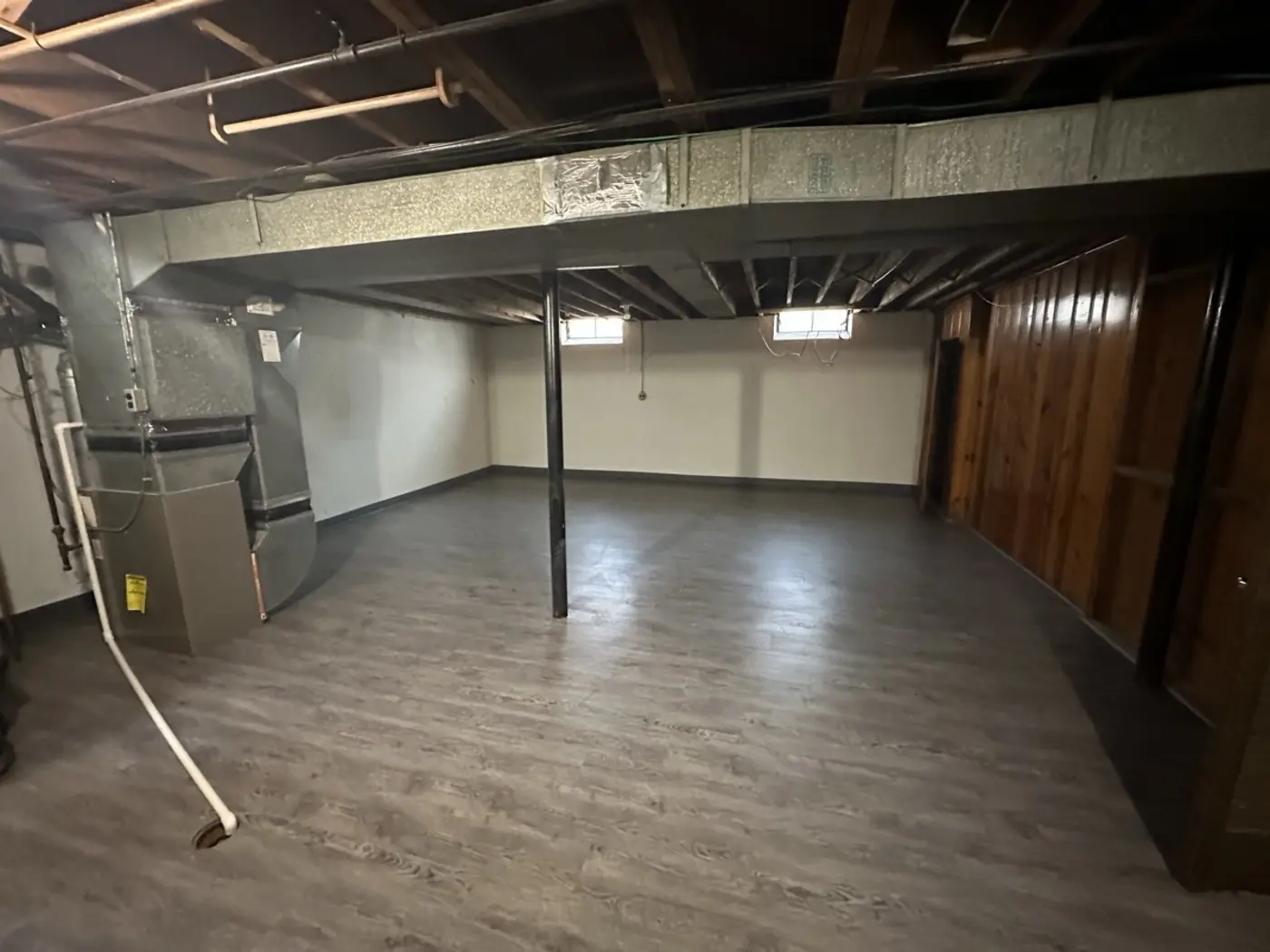
Engineered hardwood goes well in living rooms, dining rooms, bedrooms and hallways. It is not our first pick for a damp basement. Laminate suits dry rooms where you want a lot of wood look for less money. If water is a concern, luxury vinyl plank may be a better call than either. We will tell you plainly at the estimate.
How to decide
- Staying a decade or more, want real wood: engineered hardwood.
- Tight budget, dry room, active household: laminate.
- Mixed use with water risk: ask about LVP.
- Not sure: look at samples in your own light, next to your own walls.
We bring samples to your home so you can see them in the room. Our family crew installs both, usually in a day, with a 1-year workmanship warranty. See hardwood options, or read what customers say on our reviews page.
Compare real samples in your own living room.
Get a free in-home estimate