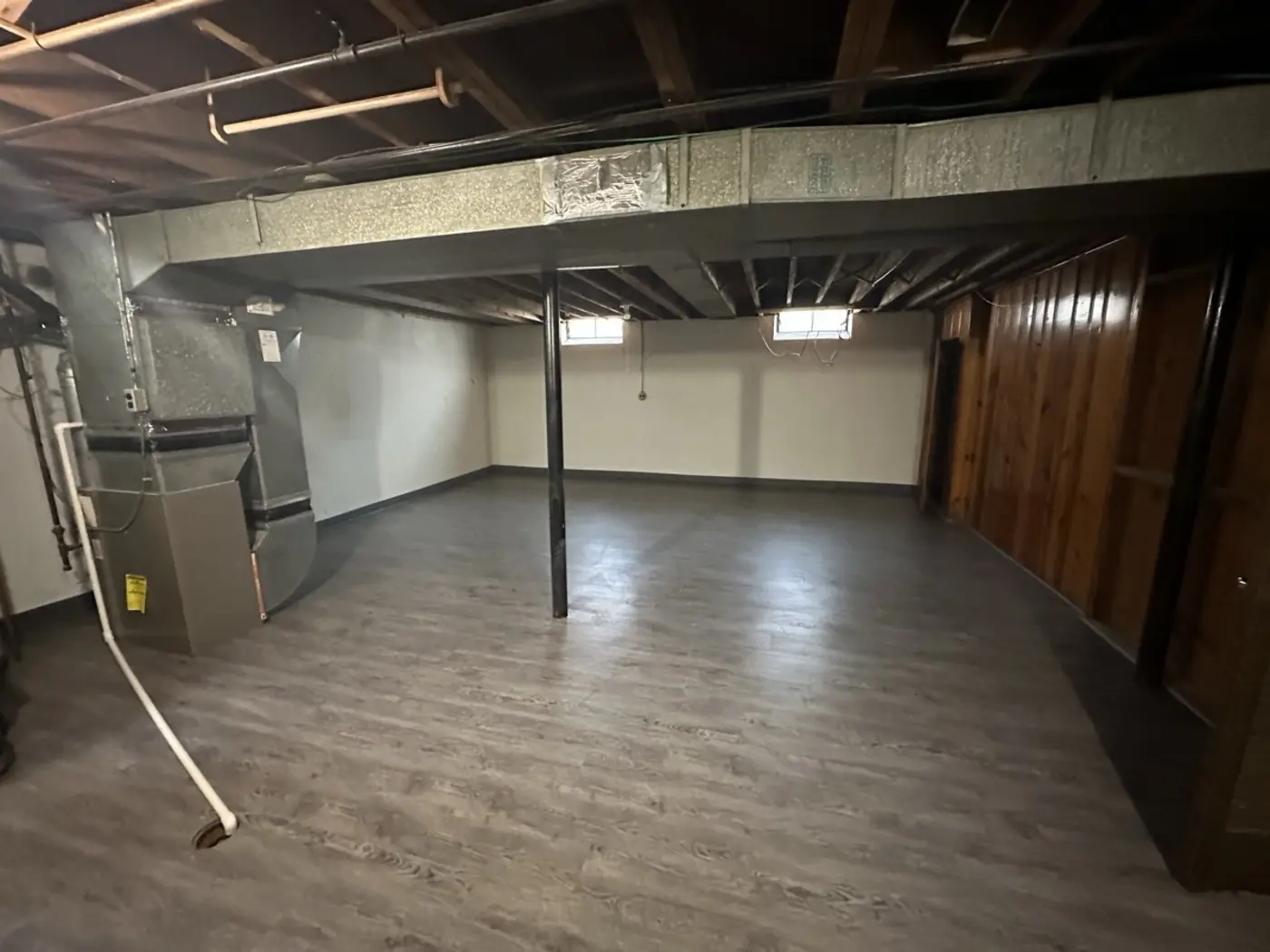
A basement in Metro Detroit lives a rough life. Spring thaw pushes water against the foundation. Summer humidity hangs in the air. Winter brings cold that comes right up through the slab. Picking a floor for that space is a different decision than picking one for a second-floor bedroom. Here is how the three main options hold up.
Start with moisture, not style
Most homes in Detroit, Royal Oak, Warren and the older inner suburbs have poured concrete or block basements that are decades old. Concrete wicks moisture. Some of it is harmless vapor. Some of it is real water after a heavy rain. Before choosing anything, look for white chalky deposits on walls, a musty smell, or damp patches on the slab after storms.
If you see active seepage, fix the source first: grading, gutters, cracks, sump pump. Flooring is the last step, not the first. We will tell you straight at the estimate if we think the slab needs attention before we put anything on it.
Luxury vinyl plank: the default choice
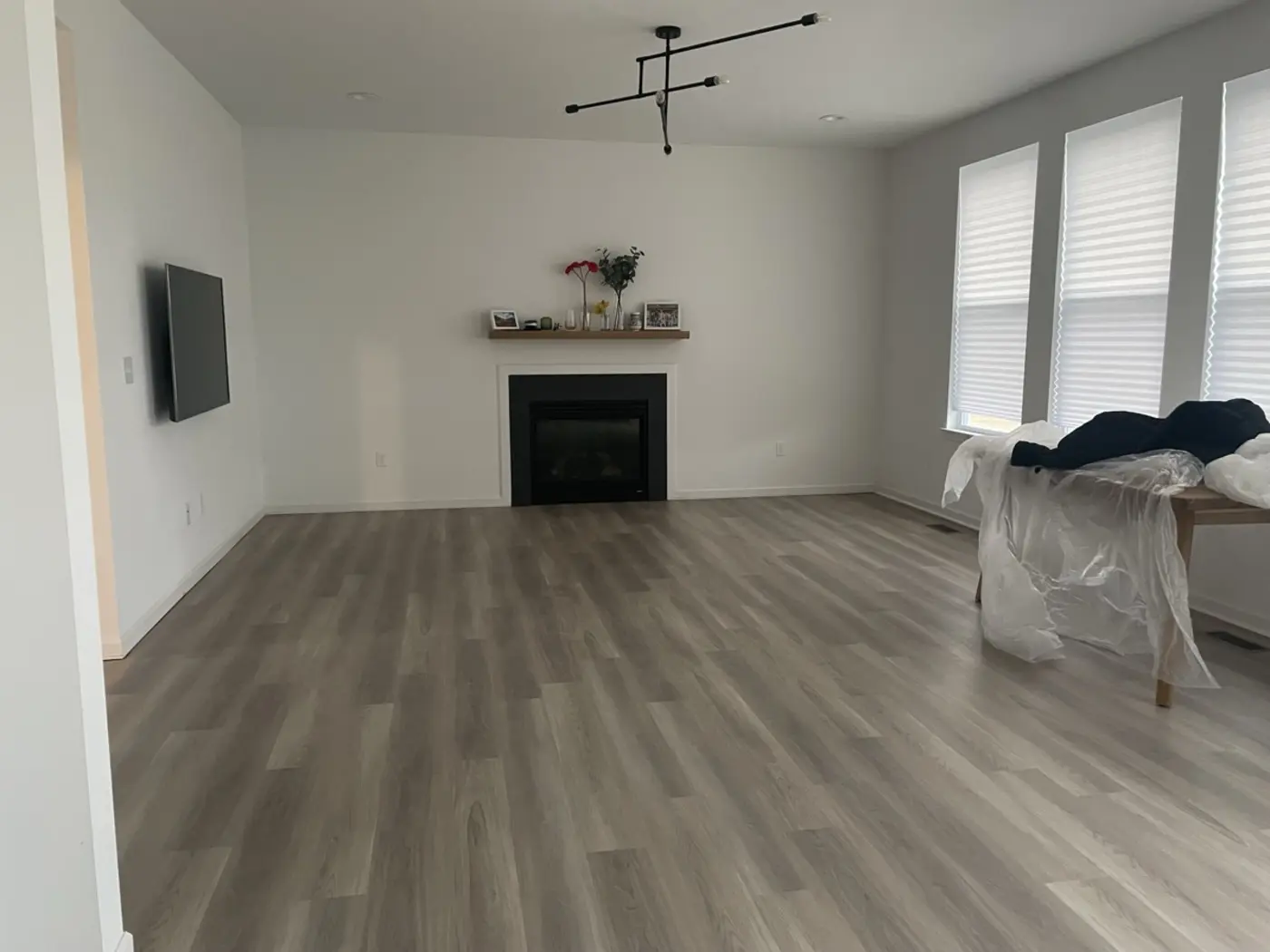
Luxury vinyl plank is the floor we install most often in basements, and for good reason. The plank is made of vinyl, so water does not swell it, warp it or feed mold. If a water heater leaks or a window well floods, you dry the surface, and the floor is fine. It also looks like real wood or a clean gray plank, so a lower level feels like part of the house instead of a cellar.
Rigid-core planks click together and float over the slab, which means no glue and no mess. A thin foam or attached underlayment takes some of the chill off. It is not as warm as carpet, but it is far better than bare concrete. You can see finished lower levels in our inspiration gallery.
Laminate: good value if the space stays dry
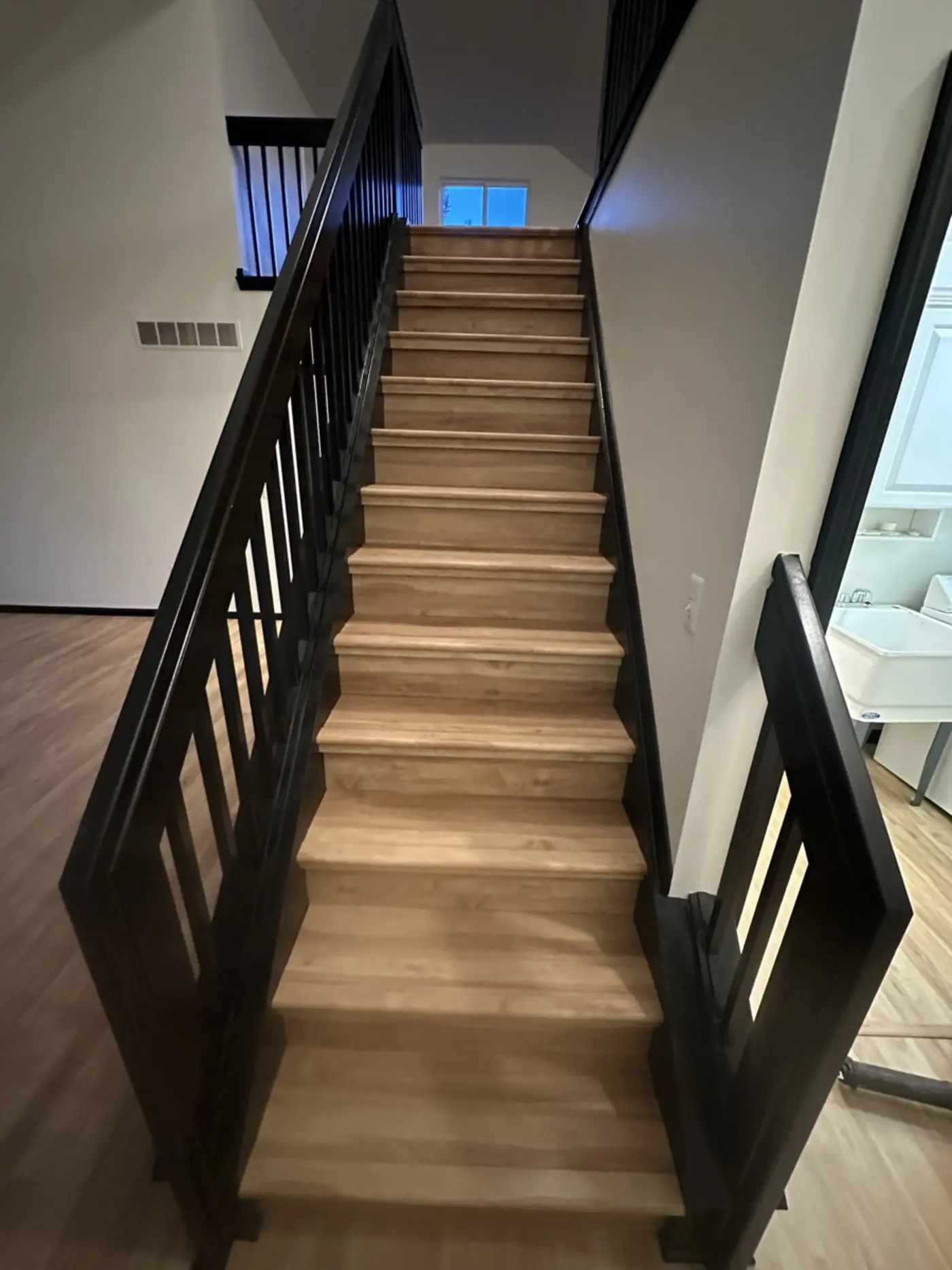
Laminate has a photographic wear layer on top of a fiberboard core. It scratches less easily than some vinyl and usually costs a little less. The catch is that fiberboard and standing water do not get along. Newer laminates have better edge sealing and some are labeled water-resistant, but resistant is not waterproof.
If your basement has never had a drop of water and you run a dehumidifier, laminate can be a smart budget pick. If there is any history of flooding, skip it.
Carpet tile: warm and forgiving
Carpet tile is not the broadloom carpet of your childhood. These are square modules, usually with a moisture-tolerant backing, that lay down without pulling up the whole room. They shine in basement rec rooms, kids' play areas and home offices. If one square gets stained or wet, you lift it and drop in a new one. They also add the warmth and sound dampening that hard floors lack.
The tradeoff: soft surfaces hold more dust and are harder to dry if a real flood hits. Carpet tile is a comfort choice, best in a basement that is dry and well ventilated.
Side by side
Those are typical ranges. Your written quote after the free in-home estimate sets the real number.
What we do before the first plank goes down
- Check the slab with a moisture reading, not just a guess.
- Level low spots so the floor does not flex or gap.
- Remove old carpet or glued vinyl completely, through our floor demolition and prep service.
- Leave a small expansion gap at the walls so the floor can move with the seasons.
- Finish with clean trim and transitions, then haul away the mess.
Our recommendation
For nine out of ten Michigan basements, go with LVP. It is forgiving, it looks good and it survives the worst the freeze-thaw cycle throws at your foundation. Choose laminate only if you are certain about dryness and want to save a little. Choose carpet tile when comfort and sound matter most.
We are a family crew, and our own team does every install, usually in a single day. Browse what neighbors say on our reviews page, or see all vinyl flooring options.
Not sure which one fits your basement? Let us look at it.
Get a free in-home estimate